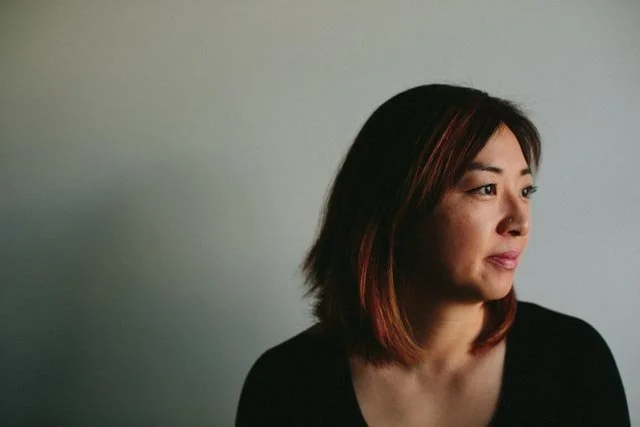
Janet Hong
Author of
When We Swallowed the Sea (Flatiron/Macmillan 2027)
Janet Hong is a writer based in Vancouver, Canada. She holds an MFA in creative writing, and her work has appeared in Brick, Freeman’s, Granta, Guernica, Words Without Borders, and Tongues: On Longing and Belonging through Language. Her debut manuscript was shortlisted for the JWC Emerging Writers Award, and she has received multiple residencies from the Banff Centre for Arts and Creativity.
Janet is also an acclaimed and widely published translator of Korean literature, with over two decades of experience bringing contemporary Korean voices to global audiences. She is the recipient of the TA First Translation Prize, awarded by the Society of Authors, and the LTI Korea Translation Award, and a two-time winner of the Harvey Award for Best International Book. Her work has been shortlisted for major honors including the PEN Translation Prize, the National Translation Award, and the International Dublin Literary Award, and several of her translations have gone on to receive international recognition, including the 2020 Krause Essay Prize. Across more than twenty translated books—spanning novels, graphic literature, and short fiction—Janet has played a central role in shaping the landscape of Korean-to-English literary translation. Alongside her translation career, she continues to develop her own fiction and nonfiction, exploring memory, language, inheritance, and the ways families carry and reshape grief across generations.
Books BY Janet

When We Swallowed the Sea (Flatiron/Macmillan 2027)
When We Swallowed the Sea is a kaleidoscopic contemporary Korean family saga, following a young woman from a long line of haenyeo who is forced to flee her island home after a tragedy shatters her family. Spanning decades and narrated across multiple voices and three generations, the novel traces her search for belonging as she moves through austere coastal landscapes and the glittering, cut-throat metropolises of Seoul and New York City. Rooted in a lineage of haenyeo in which myth and memory, survival and sorrow, exile and return are inextricably bound, it is a story about what it means to mother—and be mothered—through tragedy.