Youssef Rakha
Author of
Postmuslim: A Testimony (Graywolf Press, 2026)
The Dissenters (Graywolf Press, 2025)
Emissaries (Barakunan, 2023)
Barra and Zaman: Reading Egyptian Modernity in Shadi Abdel Salam’s The Mummy (Pivot / Palgrave Macmillan / Arab Cinema Series, 2020)
The Crocodiles (Seven Stories, 2015)
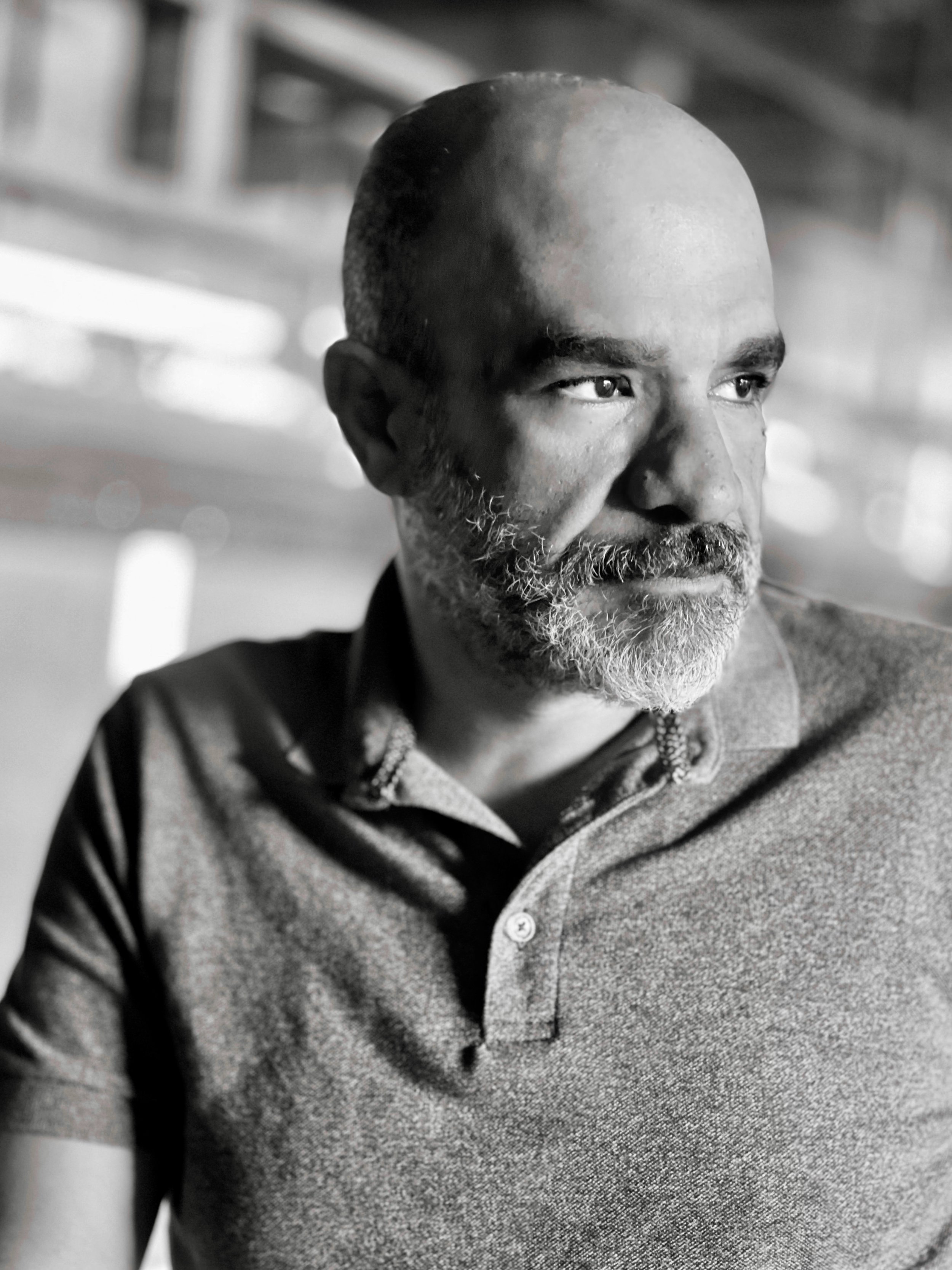
Youssef Rakha is an Egyptian novelist and essayist who writes in both Arabic and English, thinking about Egypt, Arabs and Islam. Born and raised in Cairo, he graduated from Hull University, England, in 1998. He has worked as a cultural journalist, literary translator, and creative writing coach since then. He lives with his family in Cairo.
Instagram / TheRakha.org / Represented by Ayesha Pande
books by Youssef
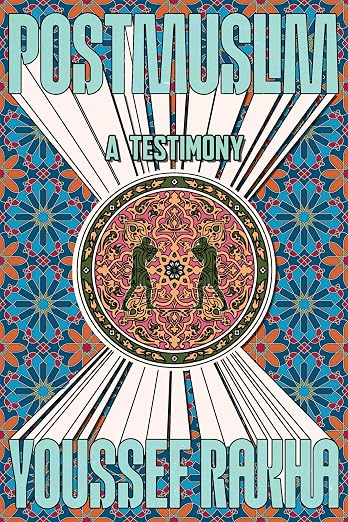

Postmuslim: A Testimony (Graywolf Press, 2026)
An ambitious and timely essay collection exploring what it means to be Arab-Muslim in the twenty-first century
Postmuslim, Youssef Rakha’s debut essay collection, tells the story of Islam’s clash with the West in the last thirty years from a perspective rarely available to the Western reader. Impassioned, intimate, erudite, and playful, these essays trace Rakha’s intellectual and spiritual transformations across multiple decades alongside significant moments in recent history. He recounts “losing his religion” as a teenager in Cairo after the fall of the Berlin Wall, resentful of the conservatism and rigid conformism of his middle-class Egyptian milieu. But what he sees and comes to understand about the West eventually disenchants him as well. Along the way, Rakha explores rich subjects such as boxing and democracy, addiction and the “hungry ghost” of the great ninth-century poet Al-Mutanabbi, recent Egyptian history rewritten in the form of horror film tropes, and a bold proposal to revitalize Arab-Muslim culture via the surprisingly multicultural lifeways of the Ottoman Empire.
“Postmuslim” is a term of Rakha’s invention that embraces the fullness of Muslim identity rather than its essentialized and distorted versions. This is a vital book for anyone negotiating their own relationship to alienation, faith, intersecting identities, and the hypocrisy of those in power.
PRAISE:
“Thoughtful, imaginative and erudite, Rakha’s book offers a vision of Arab-Muslim identity based in tolerance, diversity, and pride in global citizenship. A bold and timely collection that artfully challenges Arab-Muslim stereotypes.”―Kirkus
“Postmuslim explores the past three decades of Islam’s clash with the West from a secular Muslim perspective, finding inspiration for the future in the multiculturalism embodied by the Ottoman Empire.”―Publishers Weekly
“We are so lucky that in this beautiful book Youssef Rakha has done the hard work of reimagining what personal identity might look like if we take all of the lovely and necessary parts from our heritage and our former ambitions and discard the rest.”―Maris Kreizman, author of I Want to Burn This Place Down
“Sparring genius right here.”―Merve Emre, author of The Personality Brokers
“This is it. This is the book. Postmuslim gives us back what centuries of essentialism, in-fighting and colonial thuggery have taken: a full, honest account of Muslim identity. Its history, its fractures, and its possible futures.”―Noor Naga, author of If an Egyptian Cannot Speak English


The Dissenters (Graywolf Press, 2025)
A transgressive novel by an acclaimed writer that spans seventy years of Egyptian history
Certain as I've never been of anything in the world that you have a right or a duty to know, that you absolutely must know, I sail through the mouth of that river into the sea of her life.
Amna, Nimo, Mouna--these are all names for a single Egyptian woman whose life has mirrored that of her country. After her death in 2015, her son, Nour, ascends to the attic of their house where he glimpses her in a series of ever more immersive visions: Amna as a young woman forced into an arranged marriage in the 1950s, a coquettish student of French known to her confidants as Nimo, a self-made divorcee and a lover, a "pious mama" donning her hijab, and, finally, a feminist activist during the Arab Spring. Charged and renewed by these visions of a woman he has always known as Mouna, Nour begins a series of fevered letters to his sister--who has been estranged from Mouna and from Egypt for many years--in an attempt to reconcile what both siblings know about this mercurial woman, their country, and the possibility for true revolution after so much has failed.
Hallucinatory, erotic, and stylish,The Dissenters is a transcendent portrait of a woman and an era that explodes our ideas of faith, gender roles, freedom, and political agency.
Praise
“The Dissenters is a stylish, deftly told story about a stubbornly cosmopolitan and non-conformist set of characters whose lives set them on a collision course with Egypt's military regime leading up to the Tahrir suprising and its grim aftermath.”—AMITAV GHOSH
“One of the most original and inventivewriters of his generation.” —OMAR ROBERT HAMILTON
“The Dissenters is an encyclopedia of all the ways bodies are imprisoned or made free—by politics, sex, power, love, death. An Egypt of the senses, mind, and heart, laid open and dissected in every manner. This book will seduce you from its opening pages and stun you with its last. A tremendous, confident novel from Youssef Rakha, assuming his rightful place on the literary stage.”—BINA SHAH
“Youssef Rakhais the rare writer who is actually paying attention and trying to make sense of the world while many are devolving into despair. The Dissenterscreates a world outside the tinted windows of power, even if that means challenging the abyss.”—YURI HERRERA
“With thrilling prose and a narrative that flows as relentless as the Nile, Youssef Rakha takes us on the big dipper of Egyptian history from Nasser to now. The Dissenters is by turns haunted, horrifying, and hilarious.” —TIM MACKINTOSH-SMITH
“The Dissenters is the book of witnessing par excellence, telling not the story of just one woman or one Egypt, but rather of all of us who are of these geographies.”—SALAR ABDOH


Emissaries (Barakunan, 2023)
A Collection of Short Stories
Youssef Rakha's first volume of original English fiction is a collection of revolution-juggling, Philip K Dick-, Ballard- and Burroughs-inspired short stories about the Arab Spring and its aftermath in Cairo. In these speculative dramas focusing on the Arab Spring, its wake and its ruins, the reader is led by a colorful cast of characters through a hypnagogic cityscape pulsating with the specters of fascism, political Islam and suppressed queerness.
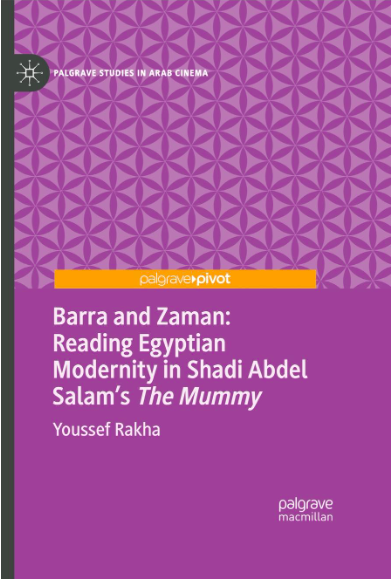

Barra and Zaman: Reading Egyptian Modernity in Shadi Abdel Salam’s The Mummy (Palgrave Macmillan (Pivot): Arab Cinema Series, 2020)
In his introduction to this creative nonfiction essay on modern Egyptian identity, which takes its cue from one of Egypt’s most epoch-making films, the film scholar Nezar Andary writes, “In effect, Rakha accomplishes that masterful “task of the translator” proposed by Walter Benjamin. The task, to summarize the latter thinker’s well-known essay, is an attentiveness to form, rhythm, and structures, all the while searching for the radical intent of the text.”


The Crocodiles (Seven Stories, 2015)
Set in Cairo between 1997 and 2011, The Crocodiles is narrated in numbered, prose poem-like paragraphs, set against the backdrop of a burning Tahrir Square, by a man looking back on the magical and explosive period of his life when he and two friends started a secret poetry club amid a time of drugs, messy love affairs, violent sex, clumsy but determined intellectual bravado, and retranslations of the Beat poets. Youssef Rakha’s provocative, brutally intelligent novel of growth and change begins with a suicide and ends with a doomed revolution, forcefully capturing thirty years in the life of a living, breathing, daring, burning, and culturally incestuous Cairo.